
Year 3 Times Tables: 3, 4 and 8 Explained for Parents
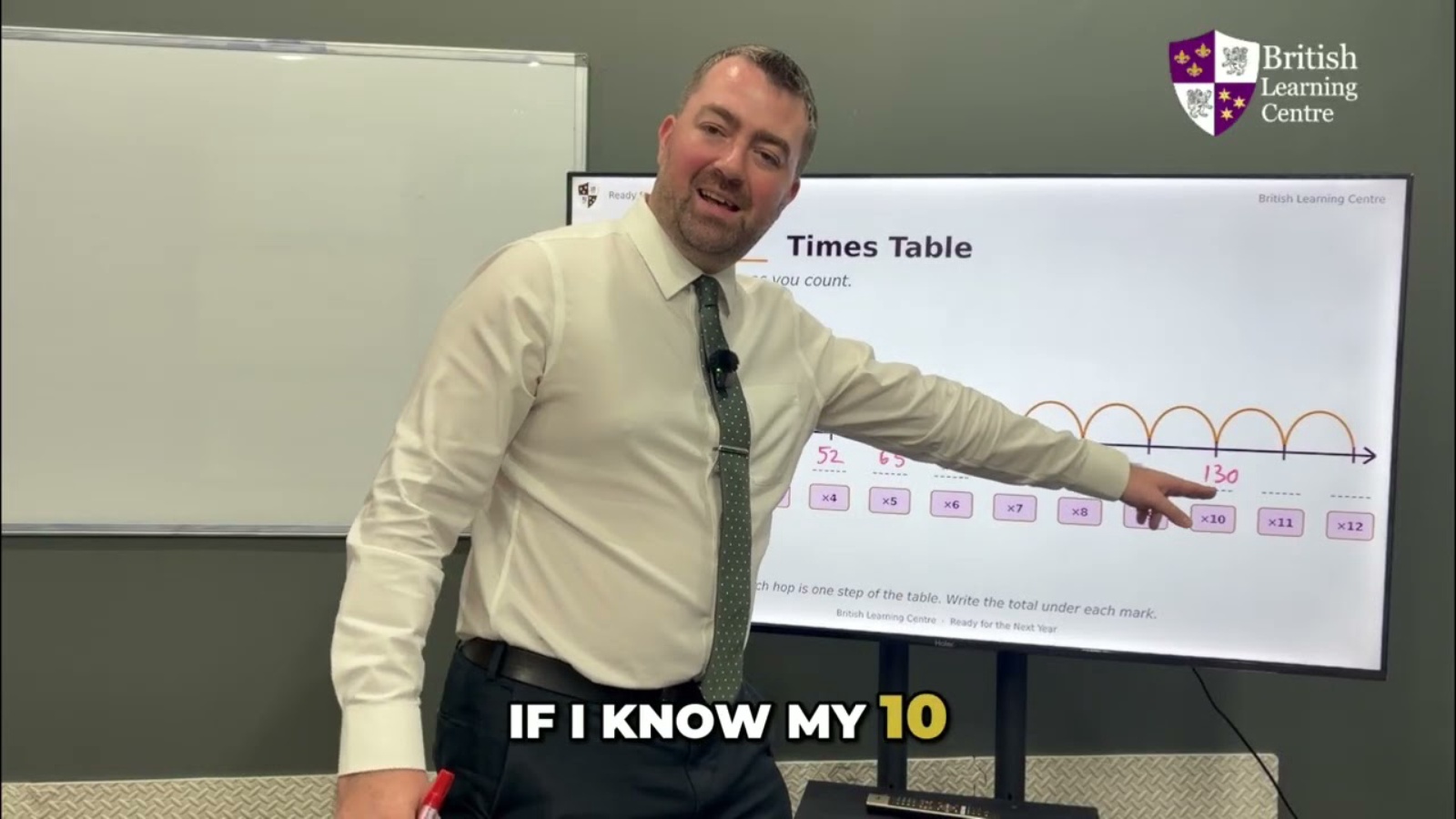
Year 3 Times Tables: 3, 4 and 8 Explained for Parents
This post accompanies our YouTube video from 2026-08-28: https://www.youtube.com/watch?v=nBGCU4bCXlM
Year 3 deepens multiplication. After early work on 2s, 5s, and 10s, many pupils focus on the 3, 4, and 8 times tables, seeing links between them. Parents supporting British curriculum maths can make practice faster and kinder by using patterns, not only chanting under pressure.
Why 3, 4 and 8 cluster together
The 4 times table doubles the 2s. The 8 times table doubles the 4s. The 3 times table connects to counting in threes and to later work with the 6s. Showing these relationships helps children derive facts they have not yet memorised.
Building fluency the steady way
Short daily practice beats weekend cramming. Mix oral rehearsal, quick written bursts, and simple games. Ask your child to explain a tricky fact: if 4 x 6 is 24, how can that help with 8 x 6?
Beyond chanting
Schools also expect pupils to use multiplication in arrays, repeated addition links, and worded problems. Practise switching between forms: 3 x 8, 8 + 8 + 8, and three groups of eight.
Watch the video
Primary video: https://www.youtube.com/watch?v=nBGCU4bCXlM
Practise at home
- Keep it little and often: two minutes counting in 3s, 4s or 8s in the car beats a long weekly drill.
- Use the doubling chain: the 4s are double the 2s; the 8s are double the 4s. Say a 4s fact, then double it for the matching 8s fact.
- Always pair a multiplication fact with its division partner (if 4 × 8 = 32, what is 32 ÷ 8?).
- Remind them that 3 × 8 and 8 × 3 are equal, so commutativity halves what they need to learn.
- Build structure first (counting in the number, doubling) rather than blind chanting alone.
- Ask how far they can count in 3s, 4s or 8s, then celebrate progress without turning it into a test.
Key steps from the lesson
- Understand how the tables are built, not only memorise the list.
- Use doubling links between 2s, 4s and 8s.
- Treat every × fact as a ÷ fact as well, ready for later fractions and the Multiplication Tables Check.
For short, supportive online sessions that lock these patterns in, explore Maths Club and tuition at britishlearningcentre.com.
Comments
Loading comments…