
Year 3 Column Subtraction with Exchanging Explained
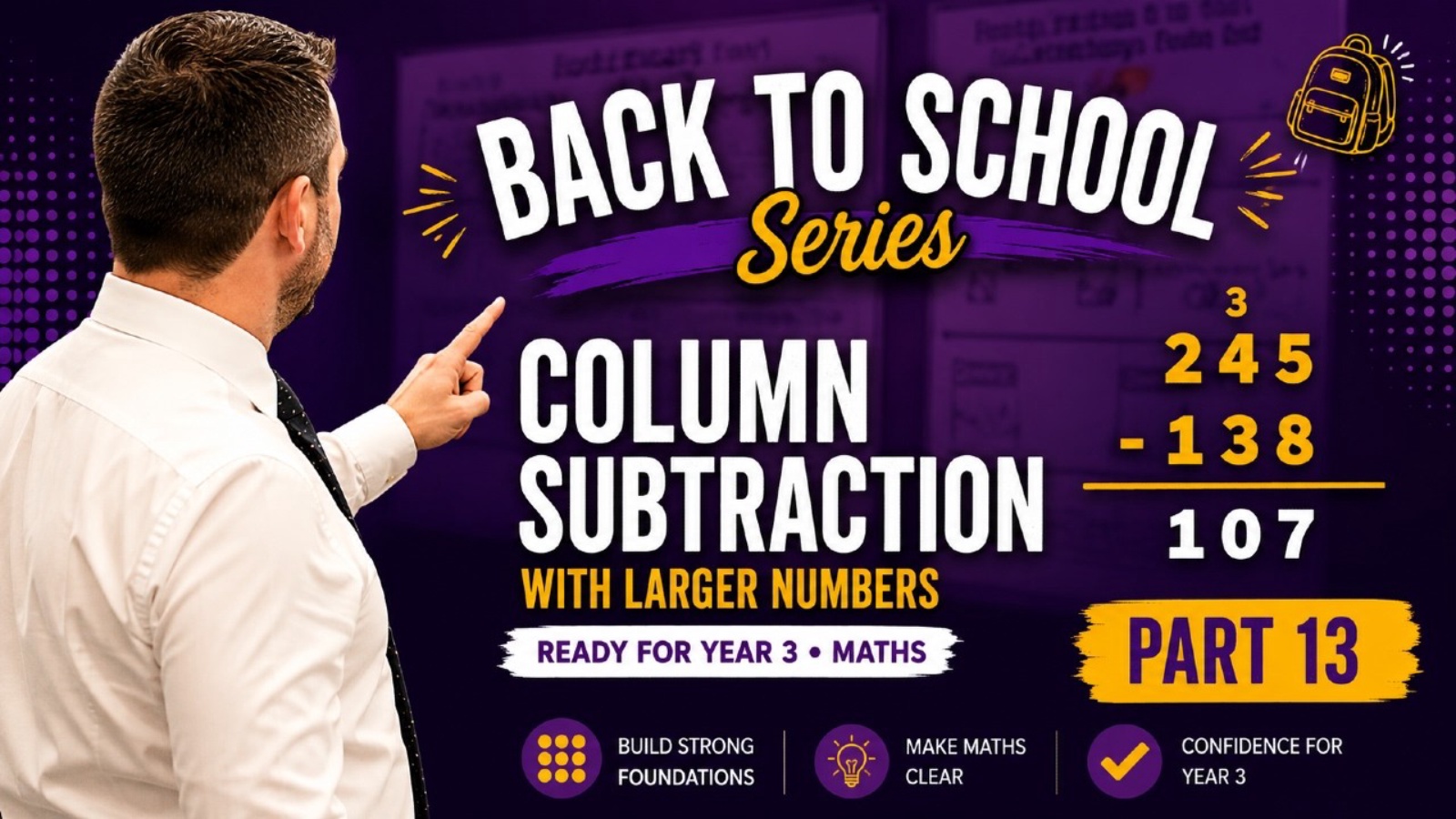
Year 3 Column Subtraction with Exchanging Explained
This post accompanies our YouTube video from 2026-09-02: https://www.youtube.com/watch?v=V-L9cuCd_kE
Column subtraction with exchanging is a common stumbling point in Year 3. Children who can subtract smaller numbers mentally sometimes freeze when a digit on top is smaller than the digit below. Parents in Thailand following the English National Curriculum often want a clear explanation of the method schools expect, without conflicting shortcuts from their own schooling.
This guide walks through the idea in plain language and suggests calm ways to practise at home.
What exchanging means
In column subtraction, we work from the ones column toward the left. When the top digit is too small, we exchange one ten for ten ones (or one hundred for ten tens). Older language called this borrowing. Many British classrooms now prefer exchanging because it emphasises place value: we are rearranging the same total, not magically inventing numbers.
If your child does not yet feel secure with tens and ones, pause and rebuild that foundation before drilling columns. Place-value strength makes exchanging feel logical rather than mysterious.
A calm teaching sequence
- Practise subtracting without exchanging first, so the column layout feels familiar.
- Use base-ten blocks or quick sketches to show exchanging one ten for ten ones.
- Record the same exchange in the written column method.
- Check answers with an inverse addition or a rough estimate.
- Only then increase to three-digit examples with multiple exchanges.
Rushing to harder numbers before the idea is solid creates fragile habits and avoidant attitudes toward maths.
Common errors to watch for
Children may exchange but forget to reduce the tens digit, subtract the wrong way round, or align hundreds, tens, and ones unevenly. Worded problems add another layer: pupils must decide that subtraction is required before they set out the column. Practise both calculation fluency and problem interpretation.
How parents can help without conflict
Ask the school or tutor which vocabulary they use (exchange, regroup, or borrow). Match that language at home. Keep sessions short. Celebrate careful checking. If homework becomes tearful, stop and return later with concrete materials. Confidence recovers faster than lost minutes of struggle.
Place value checkpoints before columns
Before hard column work, check that your child can partition numbers such as 347 into 300 + 40 + 7, and can explain the value of each digit. Quick games with place-value cards or arrow cards help. If partitioning is shaky, exchanging will feel like a trick rather than a rearrangement of the same quantity.
Also practise subtracting multiples of 10 and 100 mentally. That softens the jump into formal written methods and builds the estimation habit you will rely on for checking.
Working with school and tutors
Share one annotated example of a mistake with the class teacher. A photo of a single incorrect column layout often leads to clearer advice than a vague comment that subtraction is hard. If you use a tutor, ask them to mirror the school layout exactly, including how exchanges are notated above the digits.
Watch the video
- Primary video: https://www.youtube.com/watch?v=V-L9cuCd_kE
- Year 3 maths: three-digit column subtraction with exchanging.
- Pause where a method or facility is shown and note questions for your next school visit or home practice session.
- Share the link with a co-parent so you can compare observations afterwards.
Practical checklist for home practice
- Confirm the school method and vocabulary first
- Use place-value equipment or drawings before pure pencil work
- Start with one exchange, then build to harder examples
- Always check with addition or estimation
- Keep practice short and regular rather than long and rare
- Note persistent errors to share with the teacher or tutor
Soft next step with British Learning Centre
When you are ready for clearer next steps, visit britishlearningcentre.com. You can explore placement guidance, book a free trial lesson, or ask about English and Maths support that aligns with British curriculum pathways. If column methods feel shaky, a free Maths assessment can show whether the gap is place value, method, or confidence, then guide the right support. A short conversation often saves weeks of uncertain searching.
FAQ
Is exchanging the same as borrowing?
It is the same idea with clearer place-value language. Follow whatever term your school uses.
When should Year 3 pupils master this?
Many meet three-digit column subtraction during Year 3, but timing varies. Secure understanding matters more than racing ahead.
My child gets the answer but cannot explain the steps. Is that enough?
Fluency helps, yet explaining the exchange shows deeper place-value understanding. Ask them to teach the step back to you.
Can online lessons teach this well?
Yes, when tutors use visual models and live feedback. A free trial is a practical way to test fit.
Practise at home
- Use the home checklist: biggest number on top; start with the ones; if the top digit is too small, exchange and reduce the next column; then check by adding the answer back.
- Practise purposeful subtraction, such as change from a round amount, then prove the answer by adding.
- Watch for flipping digits (doing 8 − 5 because 5 − 8 “will not go”). Take the bottom from the top, and exchange instead.
- After every exchange, check that the column you borrowed from has been reduced.
- Keep place-value columns lined up before any calculating begins.
- Treat exchanging as carrying in reverse: one ten really is ten ones, repackaged.
Key steps from the lesson
- Line up columns with the larger number on top.
- Exchange when the top digit is too small, and reduce that neighbour column.
- Check every answer by adding back to the smaller number.
If exchanging still feels mysterious, a short online session can make the place-value swap visible: britishlearningcentre.com.
Comments
Loading comments…