
Year 3 Column Addition with 3-Digit Numbers
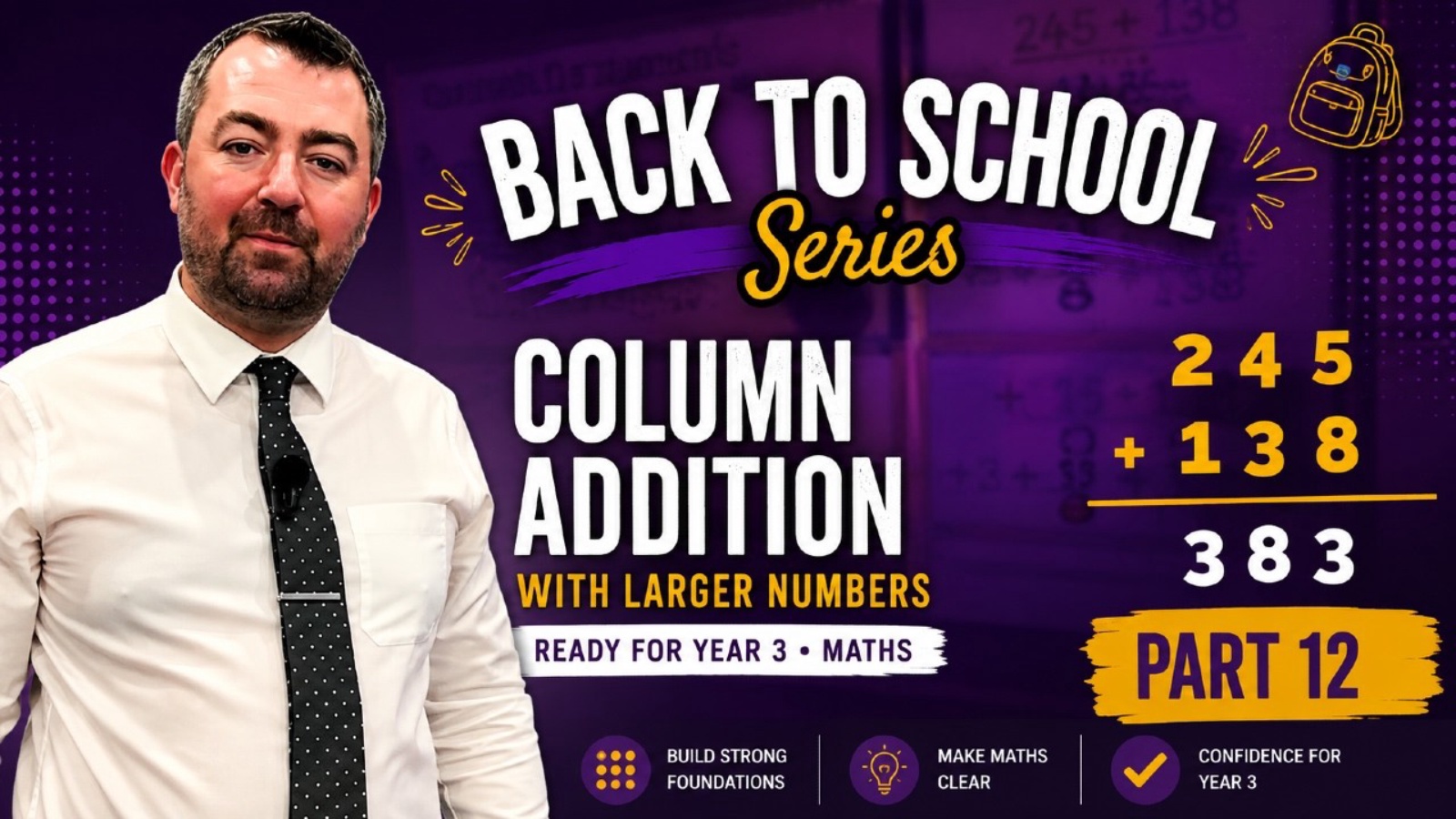
Year 3 Column Addition with 3-Digit Numbers
This post accompanies our YouTube video from 2026-09-01: https://www.youtube.com/watch?v=CfbiT-o9mXI
Column addition with three-digit numbers is a core Year 3 skill. It looks straightforward on paper, yet it rests on firm place value and careful carrying when a column total reaches ten or more. Parents supporting British curriculum maths in Thailand can help most by slowing down, aligning digits correctly, and making carrying visible rather than rushed.
Why layout matters
Write hundreds, tens, and ones in clear columns. Misaligned digits cause more errors than weak mental arithmetic. Encourage your child to say the place value of each digit as they work: six tens, not only six. That habit prevents treating every digit as a ones digit.
Carrying without mystery
When ones add to twelve, for example, we write 2 in the ones column and carry 1 ten into the tens column. Show this with base-ten blocks or a quick sketch before expecting fluent written work.
Children who only memorise carry the one without understanding often stumble later when subtraction exchanging appears.
A sensible practice path
Begin with additions that need no carrying, then one carry, then multiple carries. Mix in missing-number problems and worded contexts so pupils decide when addition is the right operation. Estimate first: is the answer nearer 400 or 700? Estimation catches wild mistakes early.
Linking addition to real life
Shopping totals, scores, and simple budgets make practice meaningful. Keep numbers age-appropriate and avoid turning every outing into a test. Short, successful practice builds the fluency Year 3 lessons assume.
Place value warm-ups that pay off
Spend two minutes partitioning numbers aloud before any column sheet: 256 is 2 hundreds, 5 tens, and 6 ones. Then add a near double or a simple bond to 10. These warm-ups reduce carrying errors because children remember what each column means.
When a carry is needed in more than one column, pause after each column and tick it. Racing through all three columns at once is a common source of lost carries.
Word problems and missing numbers
Once the written method is steady, mix in problems where a digit is missing or where two addends must be chosen to reach a total. These deepen understanding more than another page of identical sums. Keep numbers within your child comfort range so the challenge is thinking, not panic.
Talk through real examples from shopping receipts or game scores, then ask your child to set the same numbers out in columns. Bridging life and layout makes homework feel purposeful.
Watch the video
- Primary video: https://www.youtube.com/watch?v=CfbiT-o9mXI
- Year 3 maths: column addition with three-digit numbers.
- Pause where a method or facility is shown and note questions for your next school visit or home practice session.
- Share the link with a co-parent so you can compare observations afterwards.
Practical checklist for home practice
- Check digit alignment every time before calculating
- Practise saying place value aloud for a week
- Introduce carrying with concrete objects first
- Use estimation to sense-check answers
- Alternate pure calculations with simple word problems
- Share recurring mistakes with school so teaching stays consistent
Soft next step with British Learning Centre
When you are ready for clearer next steps, visit britishlearningcentre.com. You can explore placement guidance, book a free trial lesson, or ask about English and Maths support that aligns with British curriculum pathways. British Learning Centre offers Maths support aligned with British primary methods. Start with assessment or a free trial if you want guided practice. A short conversation often saves weeks of uncertain searching.
FAQ
Should my child add left to right or right to left?
Standard column addition works from the ones column leftwards so carrying lands in the next place value correctly.
What if my child is still counting on fingers?
Finger counting can be a temporary bridge. Strengthen number bonds and place value so larger additions become more efficient.
Is a calculator allowed for Year 3 homework?
Usually the point is to secure the written method. Follow school guidance for each task.
How does this prepare for later maths?
Secure column addition supports subtraction with exchanging, multi-step problems, and later written multiplication structures.
Practise at home
- Use the three-step checklist: line up ones, tens and hundreds; start with the ones; if a column reaches ten, exchange and carry one into the next column.
- Add two shopping totals in whole pounds using columns so the method feels purposeful.
- Spot the slip: deliberately write a two-digit total in one column (for example 13) and ask your child to correct you.
- Insist that each column holds one digit only: write the ones digit, carry the ten.
- Always add the carried digit into the next column; forgetting it is the most common slip.
- Never start from the left. Begin with the ones so any exchange is ready.
Key steps from the lesson
- Line up place value carefully (ones under ones, and so on).
- Work from the ones leftwards.
- Exchanging is a fair swap (ten ones make one ten), not a trick to memorise.
When layout and exchanging need patient coaching, British Learning Centre’s online Maths tuition can help: britishlearningcentre.com.
Comments
Loading comments…