
Year 2 Fractions: Halves and Quarters Explained
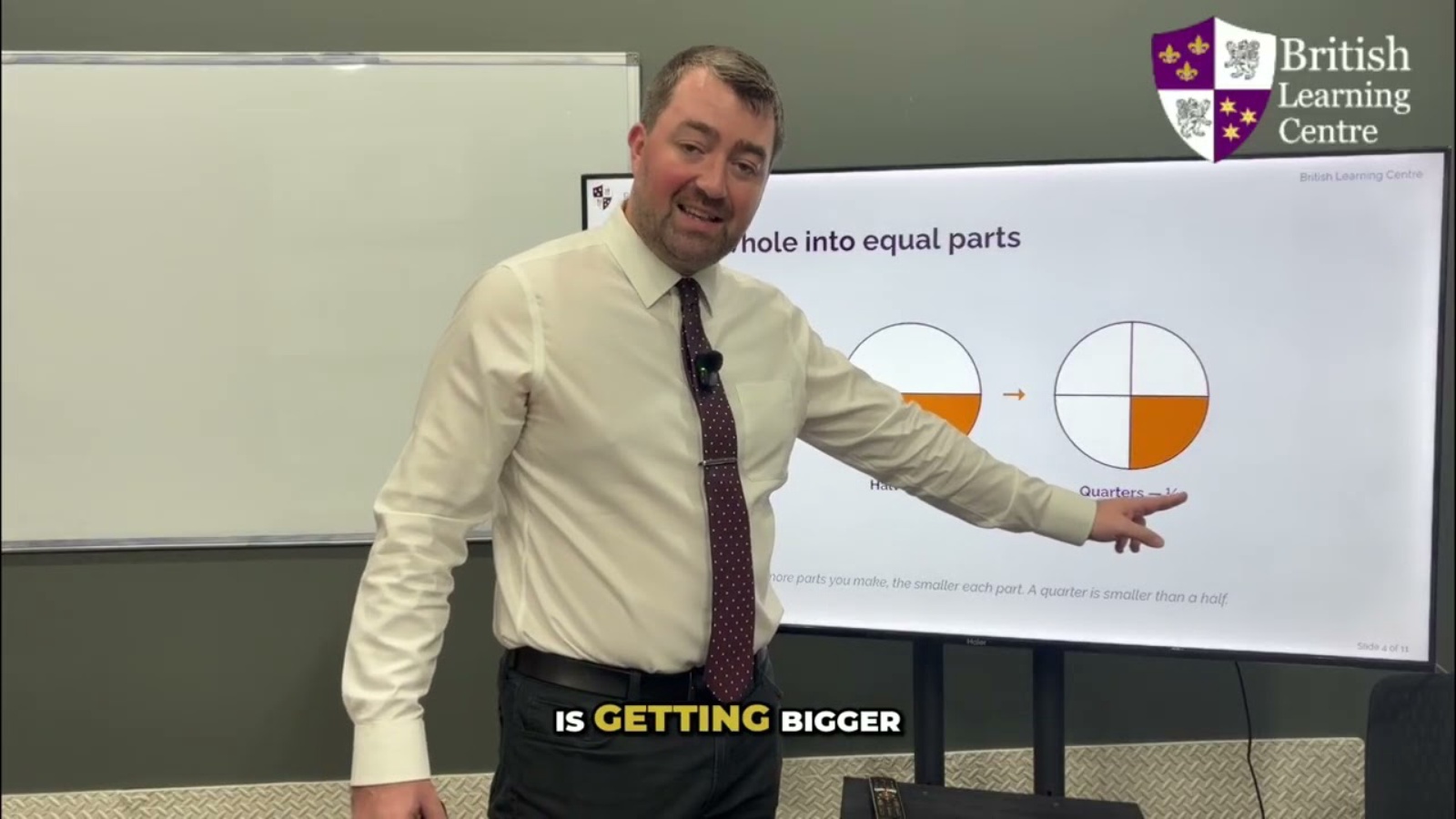
Year 2 Fractions: Halves and Quarters Explained
This post accompanies our YouTube video from 2026-08-27: https://www.youtube.com/watch?v=VXxpFGMOrYY
Fractions begin with one quiet idea: equal parts. A half means splitting a whole into two equal parts and taking one. A quarter means four equal parts. When children grasp that, every later fraction topic becomes far less intimidating.
Why halves and quarters matter
British Year 2 maths uses halves and quarters of shapes and of amounts. Finding half of 8 or a quarter of 8 is really equal sharing, the same thinking children meet in division. Secure language now (half, quarter, equal, whole) saves confusion when thirds, fifths and mixed numbers arrive later.
Equal parts first
Two pieces only make halves if they are the same size. Four pieces only make quarters if each piece matches. Fold paper, cut toast carefully, or share grapes one by one so equality is visible, not assumed. Ask: Are the parts equal? How many equal parts have we made?
Half depends on the whole
Half is not a fixed number. Half of 8 is 4; half of 10 is 5. Children sometimes think a quarter is “bigger” because 4 is larger than 2. Gently reverse that idea: the more equal parts you make, the smaller each part becomes. Two quarters make one half, a discovery that feels delightful with a chocolate bar or folded square.
Watch the video
- Primary video: https://www.youtube.com/watch?v=VXxpFGMOrYY
- Year 2 fractions: halves and quarters with clear models and common mistakes to avoid.
- Pause when a shape or amount is shared and try the same example with paper or counters at home.
- Share the link with a co-parent so home language stays consistent.
Key steps from the lesson
- A fraction is an equal part of a whole.
- Half: two equal parts; quarter: four equal parts.
- Finding a fraction of an amount means sharing equally.
- Check equality before naming the fraction.
Practise at home
- Cut and fold: cut toast into two equal halves, then into four quarters; fold paper shapes in half and half again.
- Share snacks: half of these grapes each, then a quarter each between four people, dealing fairly.
- Ask three questions: Are the parts equal? How many equal parts? What is half of this? What is a quarter?
- Watch for unequal splits and for the myth that a quarter must be larger than a half.
- Keep the words gentle and precise: equal, whole, half, quarter.
- Celebrate discovering that two quarters equal one half.
Soft next step with British Learning Centre
When you want structured support that matches British primary maths, visit britishlearningcentre.com. You can explore placement guidance, book a free trial lesson, or ask about online Maths tuition that builds fraction confidence before the next school year.
FAQ
When do children meet halves and quarters?
Many meet them in Year 1 and deepen them in Year 2. Follow your school’s sequence and your child’s confidence.
My child can shade half a shape but struggles with half of a number. What next?
Use counters and equal sharing. Link back to division language: half of 8 is 8 shared into two equal groups.
Should we use fraction symbols early?
Use words and pictures first. Introduce ½ and ¼ once the equal-parts idea is secure.
How long should home practice last?
Five to ten calm minutes with real objects beats a long worksheet when the idea is new.
Comments
Loading comments…