
Year 2 Division Through Sharing and Grouping
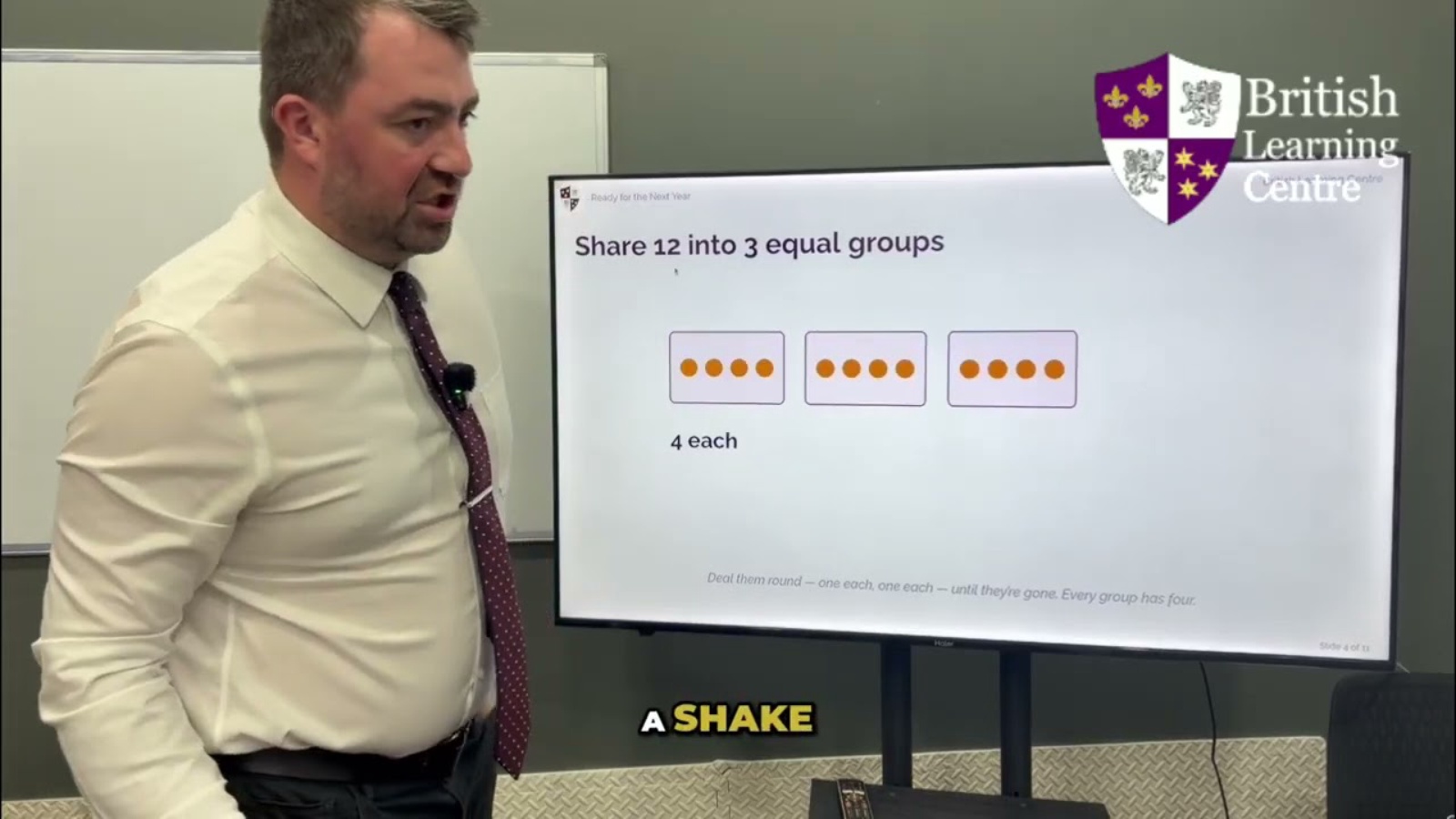
Year 2 Division Through Sharing and Grouping
This post accompanies our YouTube video from 2026-08-26: https://www.youtube.com/watch?v=H_LZ_p18jKc
Division in Year 2 is best understood as sharing and grouping before it becomes a written algorithm. Children who can split 12 biscuits among 3 friends, or make groups of 4 from 20 counters, are building the meaning that later short division relies on.
Sharing versus grouping
Sharing asks: if I share 12 into 3 equal shares, how many in each share? Grouping asks: how many groups of 3 fit into 12? Both are division. Schools often teach both so children recognise division in different worded problems.
Language that helps
Use equal groups, share fairly, left over, and how many in each. Avoid rushing to the division sign until the idea is solid. When you do introduce the symbol, keep linking it back to a story: 12 shared by 3.
Home activities that work
Deal cards into equal piles, share grapes onto plates, or group toys into teams. Ask your child to explain why the shares are equal. Five focused minutes beats a long worksheet battle.
Watch the video
Primary video: https://www.youtube.com/watch?v=H_LZ_p18jKc
Practise at home
- Practise sharing: deal snacks one at a time, round and round (like dealing cards), so every share stays equal.
- Practise grouping: lay out counters and ask how many groups of 2 (or 3, or 5) you can make from the whole set.
- Separate the two questions: How many in each? versus How many groups? Both are division, but they feel different.
- Link back to multiplication: if 3 × 4 = 12, then 12 ÷ 3 = 4, so division is not a brand-new mystery.
- Watch for reading ÷ as take-away, or for unequal shares. Groups must be equal.
- Keep the focus on understanding equal splits before racing to written facts.
Key steps from the lesson
- Division means splitting into equal groups.
- Sharing and grouping are two ways to think about the same calculation.
- Multiplication and division are inverses; use known tables to check.
If home practice needs a clearer structure, book a free trial or placement chat via britishlearningcentre.com.
Comments
Loading comments…