
Counting in 2s, 5s and 10s: Early Multiplication Skills
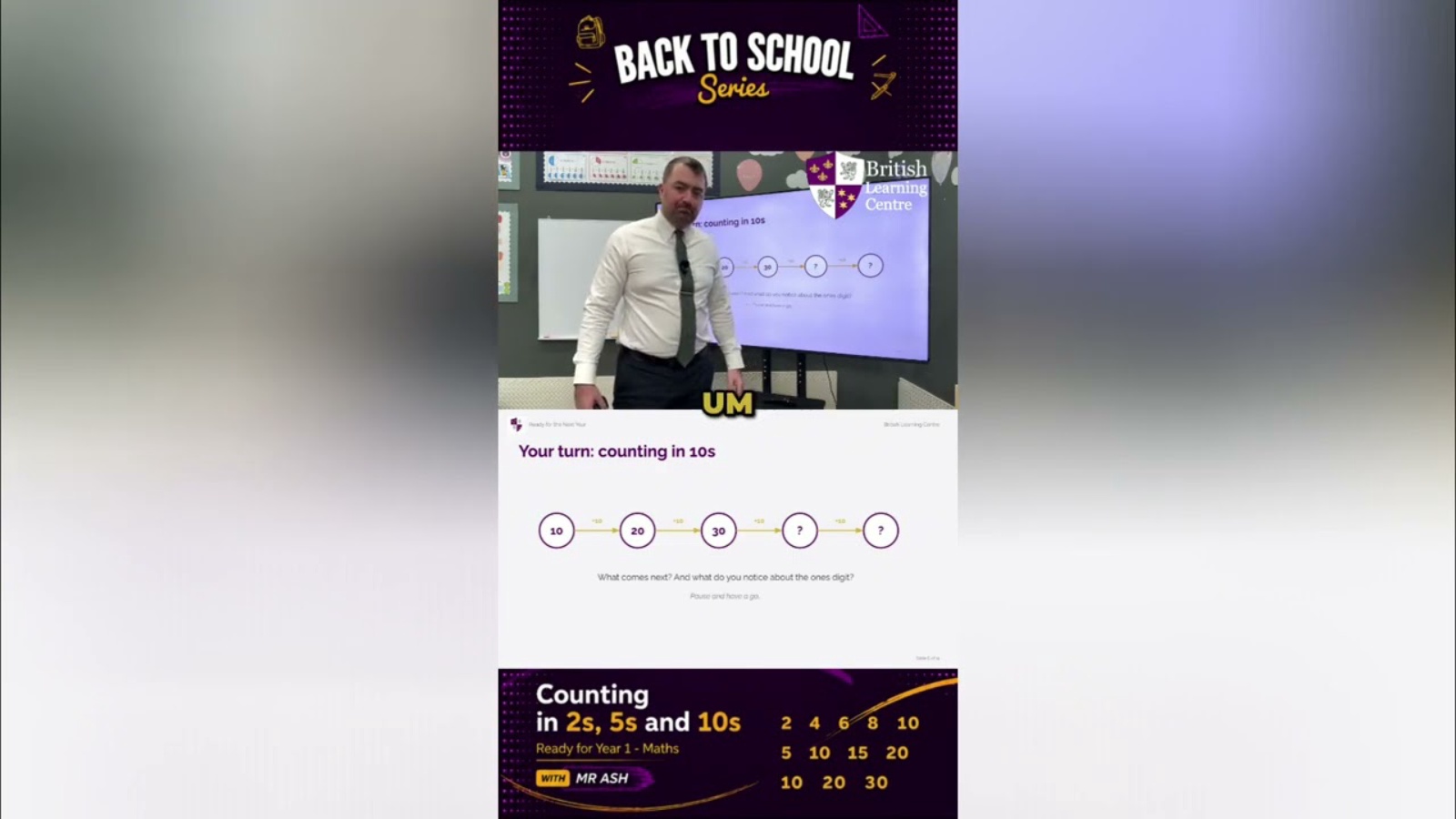
Counting in 2s, 5s and 10s: Early Multiplication Skills
This post accompanies our YouTube video from 2026-08-15: https://www.youtube.com/watch?v=IFqW1h7EiLE
Counting in 2s, 5s and 10s is an early route into multiplication. It helps children notice equal jumps, predict the next number, and connect counting with groups. The goal is not only a perfect chant but a flexible sense of quantity.
Make the patterns visible
Pair socks, count coins, or tap a rhythm. Counting in 2s can use pairs; 5s can use fingers or groups of five; 10s connect naturally to place value. Ask what changes and what stays the same.
Games for short practice
Count forwards and backwards while walking. Put number cards in order, or hide one card and ask which number belongs. Keep sessions brief and praise explanations.
Watch the video
Primary video: https://www.youtube.com/watch?v=IFqW1h7EiLE
Practise at home
- Count everyday equal groups: shoes and socks in 2s, fingers in 5s, and 10-baht (or 10p) coins in 10s, so the pattern stays concrete.
- Use a stair or step chant: say 2, 4, 6, 8 as you climb, then try the same idea with 5s and 10s on another day.
- Ask three short questions: Can you count these in 2s (or 5s, or 10s)? What comes next? What do you notice about the numbers?
- If your child slips back to counting in ones, pause and group first, then count the groups.
- Practise starting from numbers other than zero so the sequence stays flexible, not only a zero-based chant.
- Keep sessions rhythmic and brief. Secure 2s, 5s and 10s now, and the Year 2 times tables will feel familiar later.
Key steps from the lesson
- Count equal groups rather than every object one by one.
- Spot the pattern: twos are even numbers; fives end in 5 or 0; tens end in 0.
- Link the counts to early multiplication and to money place-value ideas.
When you want structured online support alongside these home habits, explore Maths pathways at britishlearningcentre.com.
Comments
Loading comments…