
British Primary Maths Years 1 to 3: A Parent Guide
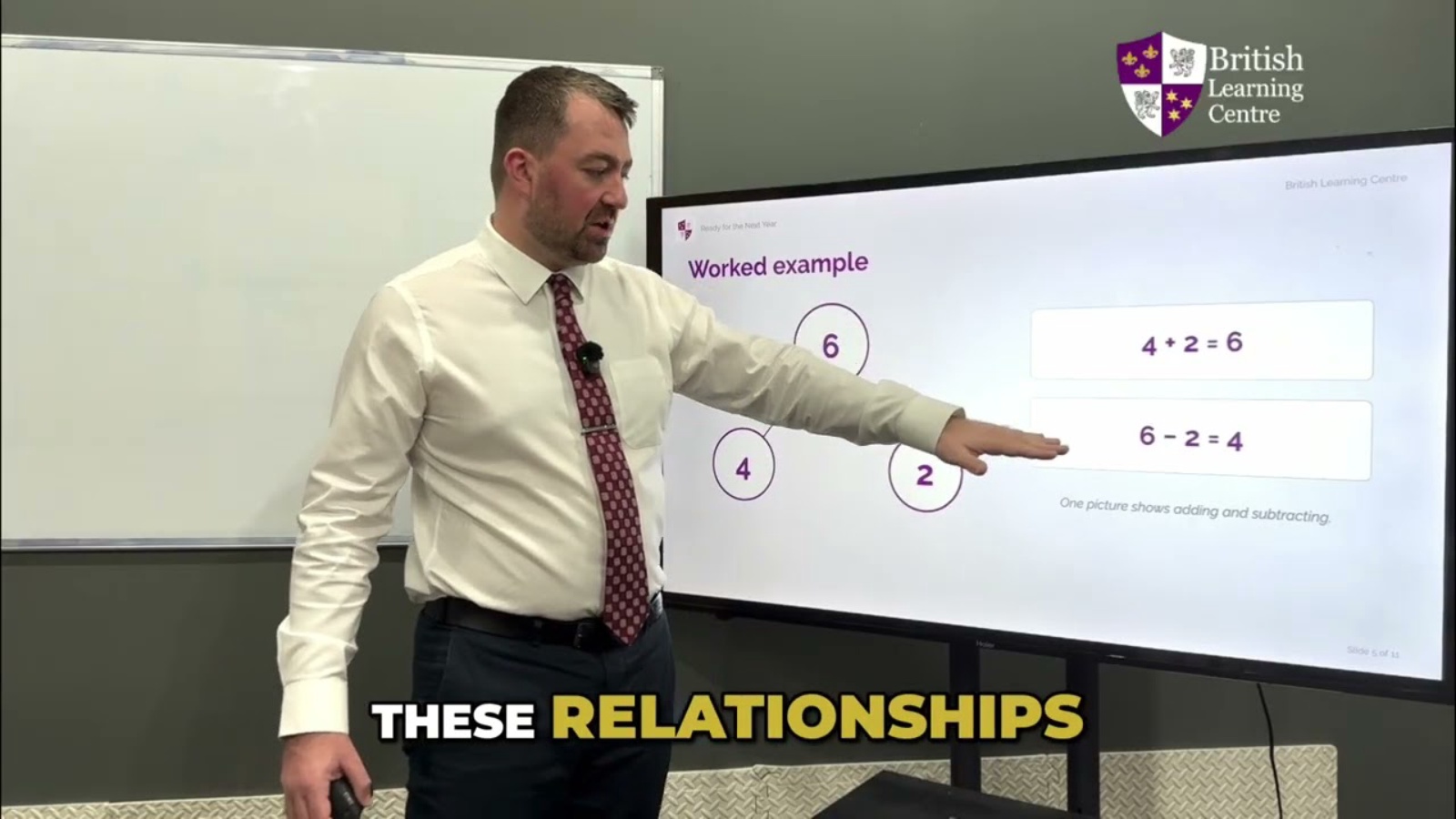
This post accompanies our YouTube video from 2026-08-07: https://www.youtube.com/watch?v=GXk2nYW8GqA Related videos are linked below.
British Primary Maths Years 1 to 3: A Parent Guide
British primary maths in Years 1 to 3 builds the foundations that later topics depend on. Number sense, secure calculation methods, and the confidence to explain thinking matter more at this stage than rushing ahead into advanced worksheets. For families in Thailand following the English National Curriculum, or preparing for a British-style international school, understanding these early years helps you support without overwhelming your child.
This guide explains what typically matters in Years 1, 2 and 3, how parents can help at home, and where short video walkthroughs can make classroom methods clearer.
What Years 1 to 3 are really building
The early primary phase is not only about getting the right answer. Children learn to represent numbers in different ways, compare quantities, and move from concrete objects to pictorial models and then to more abstract recording. Place value sits at the centre. A secure sense of tens and ones in Year 1 grows into hundreds in Year 2 and more flexible partitioning in Year 3.
Addition and subtraction methods become more efficient over time. Multiplication and division start as repeated groups and sharing, then develop into known facts and early written methods. Fractions appear in simple forms such as halves and quarters, then expand carefully. Measurement, shape, and data handling sit alongside number so children see maths as useful in daily life, not only as textbook exercises.
Year by year snapshot
Year 1 often focuses on counting confidently, reading and writing numbers, understanding one more and one less, and using practical equipment for addition and subtraction within 20 and beyond. Children begin to talk about why an answer makes sense.
Year 2 strengthens mental strategies, introduces more structured recording, and builds early multiplication through arrays and equal groups. Problem-solving language becomes more important. Children should start to check answers and spot when something looks unlikely.
Year 3 typically expands place value to three-digit numbers, develops written addition and subtraction, and grows times tables knowledge. Worded problems become longer. Children who still rely only on counting in ones can find this year suddenly harder, which is why earlier fluency matters.
How parents in Thailand can support at home
Keep support short and regular rather than long and rare. Ten focused minutes on number bonds or times tables often beats an hour of frustrated homework.
Practical ideas include:
- Counting coins, steps, or cooking measures in everyday English
- Asking your child to explain how they got an answer, not only what the answer is
- Using number lines, counters, or drawings before jumping to formal methods
- Playing simple games that involve doubles, halves, or making ten
- Keeping language positive when mistakes appear, then revisiting the method calmly
If your child attends a Thai or bilingual school while aiming for a British pathway later, check that vocabulary matches English curriculum language. Words such as "difference", "product", "partition", and "remainder" deserve careful attention.
Watch: British primary maths explained
These videos help parents see classroom-style approaches and common Year 1 to 3 themes in action:
- https://www.youtube.com/watch?v=GXk2nYW8GqA
- https://www.youtube.com/watch?v=3PKnKKwr-Jw
- https://www.youtube.com/watch?v=vYAIrkOf7vs
Watch one clip with your child if they enjoy it, or watch alone first so you can mirror the language teachers use.
Practical checklist for parents
- Confirm your child's current year group against British curriculum expectations
- Identify whether gaps sit in place value, calculation, or worded problems
- Practise times tables and number bonds in short daily bursts
- Ask schools or tutors which written methods they teach, then stay consistent at home
- Note any anxiety around maths and address pace before adding harder content
- Consider a placement-style check if you are unsure whether Year 2 or Year 3 content is the right stretch
When extra support helps
Some children need more than home practice. Mixed-year classes, a recent move between countries, or limited English can hide maths ability behind language barriers. Targeted tuition that follows British methods can rebuild confidence quickly when it is pitched at the right level.
British Learning Centre supports families through assessment, online lessons, and centre-based programmes aligned with British primary pathways. If you would like clarity on level before choosing support, start with the free assessment and free trial options at britishlearningcentre.com, or explore placement guidance if school entrance is part of your plan.
FAQ
Should my Year 2 child already know all times tables?
Not all of them. Early multiplication facts and understanding of equal groups matter first. Fluency grows through Year 2 and Year 3 with regular practice.
Is British primary maths very different from other curricula?
Methods and language can differ. Place value depth, reasoning, and specific calculation approaches are often more structured than parents expect from memory of their own schooling.
How can I tell if my child is behind?
Look for fragile place value, reliance on finger counting for larger numbers, or avoidance of worded problems. A short curriculum-aligned assessment is the clearest check.
Can online maths support work for young children?
Yes, when sessions are interactive, age-appropriate, and backed by clear parent communication. A free trial is a good way to test fit.
Comments
Loading comments…