
Addition within 20: Bridging Ten Explained for Parents
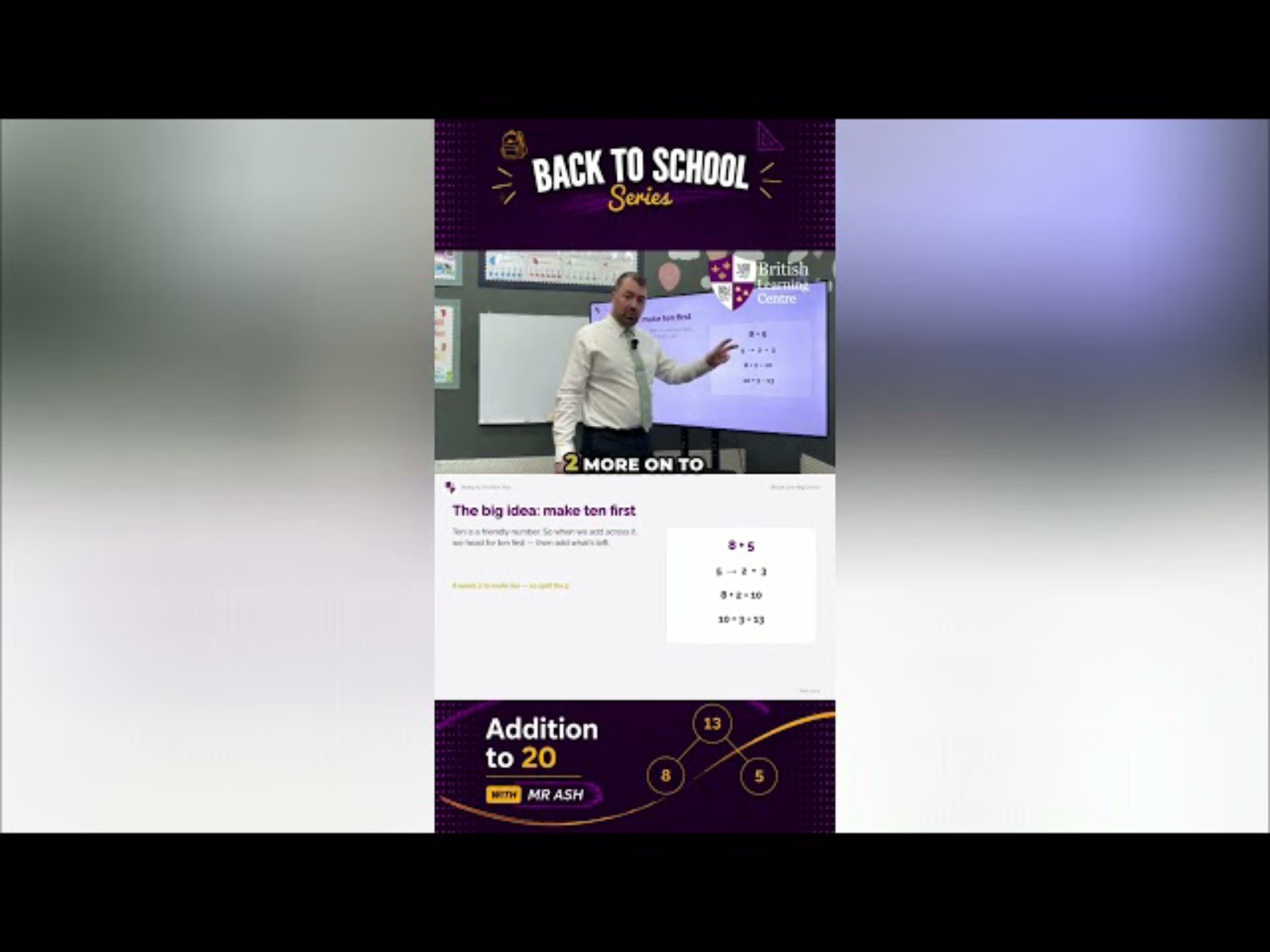
Addition within 20: Bridging Ten Explained for Parents
This post accompanies our YouTube video from 2026-08-11: https://www.youtube.com/watch?v=otfpSv0N-w4
Bridging ten is a reliable way to add when a sum crosses ten, such as 8 + 5. Instead of counting every step on fingers, children make ten first, then add what is left. It rests on number bonds to 10 and becomes a mental habit they will use for years.
Why bridging ten matters
Counting one by one across ten is exactly where slips appear. Making ten is faster and more accurate. British Year 1 classrooms return to this strategy because it supports later subtraction, larger numbers and everyday totals. The key idea is simple: head for ten first, then add the rest.
How the method looks
Take 8 + 5. Ask how many more make ten from 8 (that is 2). Use 2 from the 5 to make ten, then add the leftover 3. So 8 + 5 becomes 10 + 3 = 13. Ten frames help children see the full row of ten before the extras appear.
Watch for these gentle pitfalls
Some children still count all from one. Encourage making ten instead. Others stop at ten and forget the second step. Remind them: make ten, then add the leftover. If they cannot see how many make ten, return briefly to number bonds to 10.
Watch the video
- Primary video: https://www.youtube.com/watch?v=otfpSv0N-w4
- Addition within 20 using bridging ten, with clear models and parent-friendly language.
- Pause on the ten-frame or number-bond moment and try the same sum with counters at home.
- Revisit number bonds to 10 if the first step feels shaky.
Key steps from the lesson
- Spot that the sum will cross ten.
- Ask: How many more to make ten?
- Split the second number: use part to make ten, then add the leftover.
- Say the total as ten plus the leftover.
Practise at home
- Pose one make-ten sum at a time (for example 7 + 6) and talk through both steps aloud together.
- Use a snack ten frame: fill one frame to ten, add a few more into a second row, and read the total.
- Ask: How many more to make ten? How many are left to add? Which was easier, counting or making ten?
- Keep number bonds to 10 sharp; they are the engine that makes bridging work.
- Prefer short, frequent practice over long drills.
- Celebrate when your child chooses making ten without being prompted.
Soft next step with British Learning Centre
If bridging ten still feels fragile, structured online Maths support can rebuild number bonds and the two-step habit calmly. Visit britishlearningcentre.com for placement guidance, a free trial lesson, or Year 1 ready pathways with British Learning Centre.
FAQ
Does my child need a ten frame?
It helps, yet fingers, counters or a drawn grid work well. The idea matters more than the equipment.
What if they prefer counting on?
Counting on is useful. Bridging ten becomes important when sums cross ten and counting becomes slow or error-prone.
Should we write the split every time?
At first, yes: show 5 as 2 + 3 under the sum. Later, many children will do the split mentally.
How does this link to subtraction?
Landing on ten first also powers subtraction within 20 on a number line. The same bonds do both jobs.
Comments
Loading comments…